

You can usually tell when an e-commerce brand has “marketing” but not a marketing system. Ads spike for a week, then drop. Revenue looks fine on the surface, but margins are quietly getting squeezed. Email sends happen when someone remembers. SEO is “on the roadmap.” Meanwhile, every channel is reporting its own version of the truth.
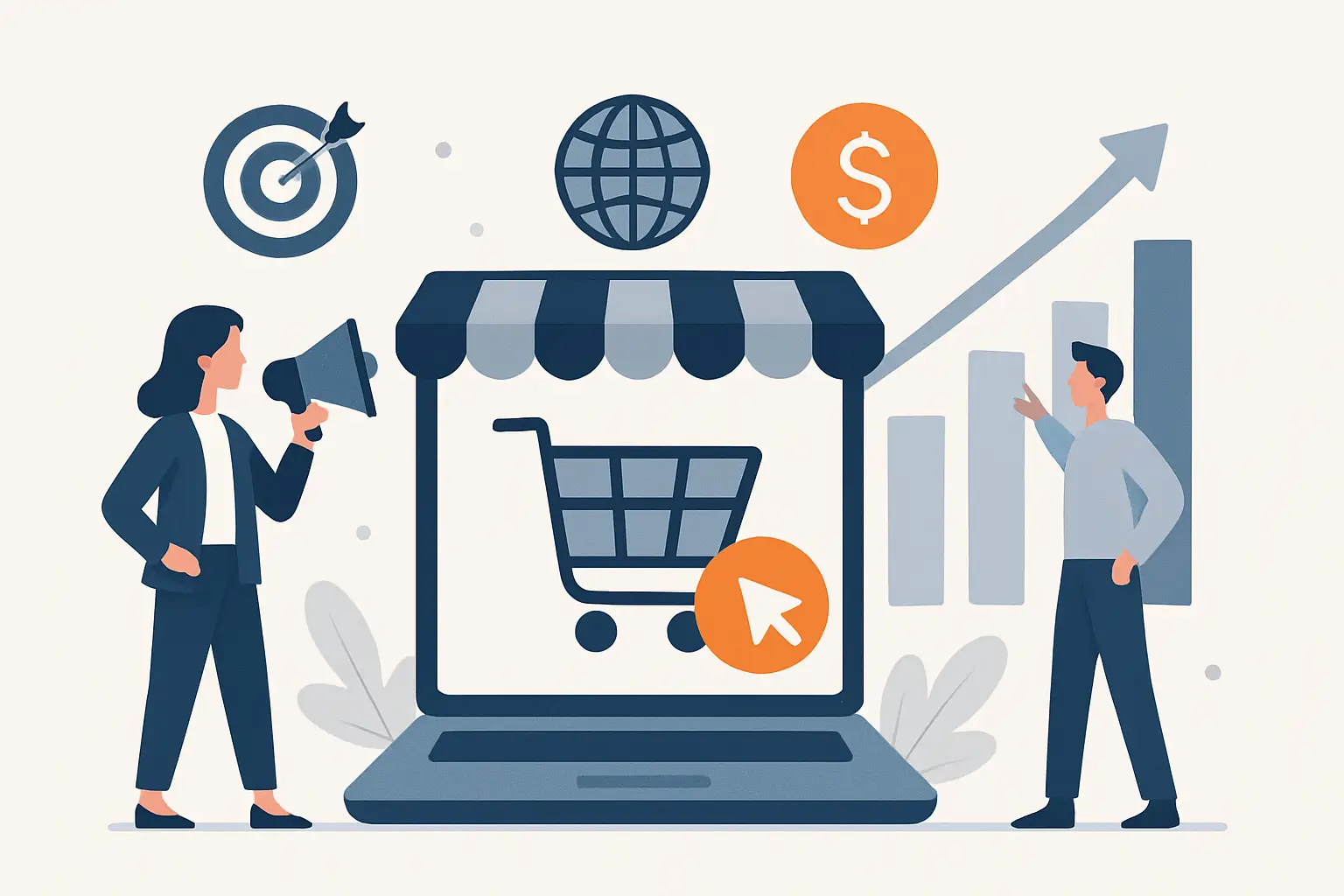
End to end digital marketing for ecommerce is the opposite of that. It is a single operating model where acquisition, conversion, retention, and measurement are planned together, built correctly, and managed continuously. Not because it sounds neat on a slide deck – but because that is how you get predictable growth without hiring a full in-house team.
What “end-to-end” really means for e-commerce
“End-to-end” is not “we can do Meta ads and email.” It means your marketing is managed from setup to optimization with clear accountability, shared targets, and channel decisions that protect the business.
At a practical level, end-to-end means four things.
First, your tracking and data are reliable enough to make budget decisions. Second, your paid media is structured to acquire customers profitably, not just generate clicks. Third, your lifecycle email is built to convert more first-time buyers and drive repeat purchases without discount addiction. Fourth, your SEO is engineered around revenue intent so you gain organic visibility that actually converts.
When those components operate together, you stop asking “Which channel worked?” and start managing the system: customer acquisition cost, contribution margin, payback period, repeat rate, and revenue per subscriber.
The operating model: consult, design, develop, optimize
E-commerce brands get in trouble when execution happens before the business is understood. The most reliable path is a disciplined workflow: consult to align on goals and constraints, design the strategy and measurement plan, develop the assets and campaigns, then optimize continuously.
The consult phase is where a real partner earns trust. This is where you define what “success” means in your business, not in a platform dashboard. If you have a tight margin, you cannot run acquisition the same way as a high-margin brand. If inventory is limited, your prospecting strategy has to be controlled. If you are entering a new category, creative and landing pages matter more than bid tweaks.
Design is where you turn those realities into a channel plan with targets. You decide what you are optimizing for now (profit, new customer volume, higher AOV, retention) and what you are willing to trade off. For example, pushing aggressive new customer growth can temporarily raise returns and support load. That is not a reason to avoid growth – it is a reason to plan for it.
Develop is where things either become scalable or turn into a patchwork. Campaign architecture, feeds, landing pages, email flows, and SEO foundations need to be built like infrastructure. You should be able to expand spend, add products, and launch promotions without rebuilding the whole machine.
Optimization is the difference between a vendor and an execution partner. Platforms change weekly. Creative fatigues. Competitors copy offers. A reliable end-to-end team monitors performance, tests intentionally, and keeps the system healthy, not just “active.”
Paid media: performance first, then scale
Paid advertising is usually the largest growth lever and the fastest way to waste money. The fix is not secret targeting or a new hack. It is disciplined structure, creative that matches the offer, and measurement that keeps spend honest.
On Meta and TikTok, the game is creative and iteration speed. Your account needs a testing engine that produces new angles, hooks, and formats on a schedule. But creative without guardrails can inflate CPA quickly. That is why you need clear thresholds for spend, frequency, and blended return – and a plan for what happens when prospecting demand outpaces your conversion rate.
On Google and YouTube, intent management matters. Shopping and Performance Max can drive volume, but only when your feed is clean and your product data supports the algorithm. Search campaigns still earn their keep when you separate brand, non-brand, and competitor intent and measure incrementality correctly. YouTube can scale awareness and assist conversions, but it needs strong creative and a timeline that matches your buying cycle.
On LinkedIn, the fit depends on what you sell. For many e-commerce brands, it is not a primary revenue channel. For B2B-ish products, high AOV items, or wholesale plays, it can be a strong lever. End-to-end means you make that call based on your numbers, not because a platform is trendy.
The trade-off to acknowledge: scaling paid media can expose weaknesses elsewhere. If your product page loads slowly, if reviews are thin, or if shipping costs surprise customers at checkout, no campaign structure will “fix” that. End-to-end marketing includes surfacing those blockers early and resolving them, because your ad account cannot compensate for broken conversion paths forever.
Lifecycle email: the profit center most brands underuse
If paid media is your gas pedal, lifecycle email is your engine efficiency. It turns traffic you already paid for into more revenue, more repeat purchases, and more margin.
The baseline is not newsletters. The baseline is flows that run every day without supervision: welcome, browse abandonment, cart abandonment, post-purchase, replenishment (when relevant), winback, and customer education sequences that reduce refunds and increase satisfaction. In Klaviyo, that means correct event tracking, clean segmentation, and templates designed to sell, not just look nice.
The key is to build for behavior, not blasts. Your best customers should not get the same messages as first-time buyers who almost purchased. When segmentation is done well, you can reduce sending volume while increasing revenue per recipient and protecting deliverability.
There is a real “it depends” here: discounts. Some brands need them to compete. Others use them as a crutch and train customers to wait. End-to-end email strategy sets rules for when to discount, who to discount, and how to increase AOV and retention without eroding brand positioning.
SEO: compounding growth you can measure
SEO is often treated like a long-term brand project that sits in a separate lane from performance marketing. That is a mistake. For e-commerce, SEO should be designed around commercial intent and measurable revenue contribution.
The foundation is technical cleanliness: indexation, crawl paths, site speed, and structured data. Then comes information architecture that helps both users and search engines understand your catalog – collections that map to how people actually shop, not how your internal team names categories.
Content is where many brands waste time. The goal is not publishing volume. The goal is capturing demand with pages that match intent: category pages that rank for “best” and “top” terms, product-led pages for specific use cases, and educational content that supports conversions and reduces pre-purchase uncertainty. Done correctly, SEO also feeds your paid strategy by showing you which queries convert and which product attributes matter.
The trade-off: SEO compounds, but it is not instant. If you need revenue next month, you lead with paid while building SEO in parallel. If you have stable cash flow, investing earlier in SEO reduces future dependency on ads.
Measurement: one source of truth, not five dashboards
End-to-end only works when measurement is consistent across channels. That does not mean “perfect attribution,” because that does not exist. It means a decision framework you trust.
You need clean analytics setup, platform pixels configured correctly, and conversion events aligned with your funnel. You also need to track what matters: blended CAC, new vs returning customer mix, payback period, and contribution margin.
Attribution debates can turn into a distraction. The operational approach is to combine platform reporting with store-level reality. If Meta says returns are down but total revenue and new customer volume are rising at an acceptable margin, you do not panic. If platform numbers look great but your bank account tells another story, you slow down and diagnose. End-to-end teams protect you from both kinds of mistakes.
What to expect from an execution partner
If you are hiring an agency because you do not want to build a full in-house team, the bar should be high. You are not buying activity. You are buying structured delivery and ongoing operational support.
You should expect platform specialization, documented workflows, and proactive optimization. You should also expect honest calls when the bottleneck is not “more ads,” but creative production, offer positioning, landing page friction, or fulfillment constraints.
This is where a consult–design–develop partner model fits e-commerce. Strategy matters, but it is only valuable when it turns into campaigns, flows, and SEO assets that perform every week.
If you want that kind of accountable, end-to-end execution across paid media, Klaviyo lifecycle email, and SEO, Proline Web is built for it: https://prolineweb.com.
Building your end-to-end roadmap
The fastest way to make end-to-end digital marketing real is to start with the order of operations.
Get measurement and tracking stable first, because every other decision depends on it. Next, align paid media with your funnel reality: creative testing and campaign structure paired with landing pages that convert. Then build lifecycle email flows to capture revenue you are currently leaving on the table. Finally, develop your SEO foundation so organic growth compounds and reduces your long-term paid dependency.
If you try to do all of it at once without a workflow, you will end up with partial setups across channels and no clear accountability. If you sequence it properly, you get quick wins without sacrificing scalability.
A helpful closing thought: the goal is not to “be on every channel.” The goal is to run one system where every channel earns its budget, every asset has an owner, and performance improves because someone is responsible for the whole machine – not just one part of it.