

Most e-commerce growth problems don’t start in the ad account.
They start when you’re forced to stitch together decisions across too many people – a media buyer optimizing for ROAS, a designer chasing brand vibes, a developer patching site issues, and an email marketer working off yesterday’s promos. Everyone is “doing their part,” yet revenue feels inconsistent and your team spends more time managing vendors than building momentum.
That’s exactly why the consult design develop digital partner model works. It’s not a slogan. It’s an operating system for turning growth goals into coordinated execution.
What “consult design develop digital partner” actually means
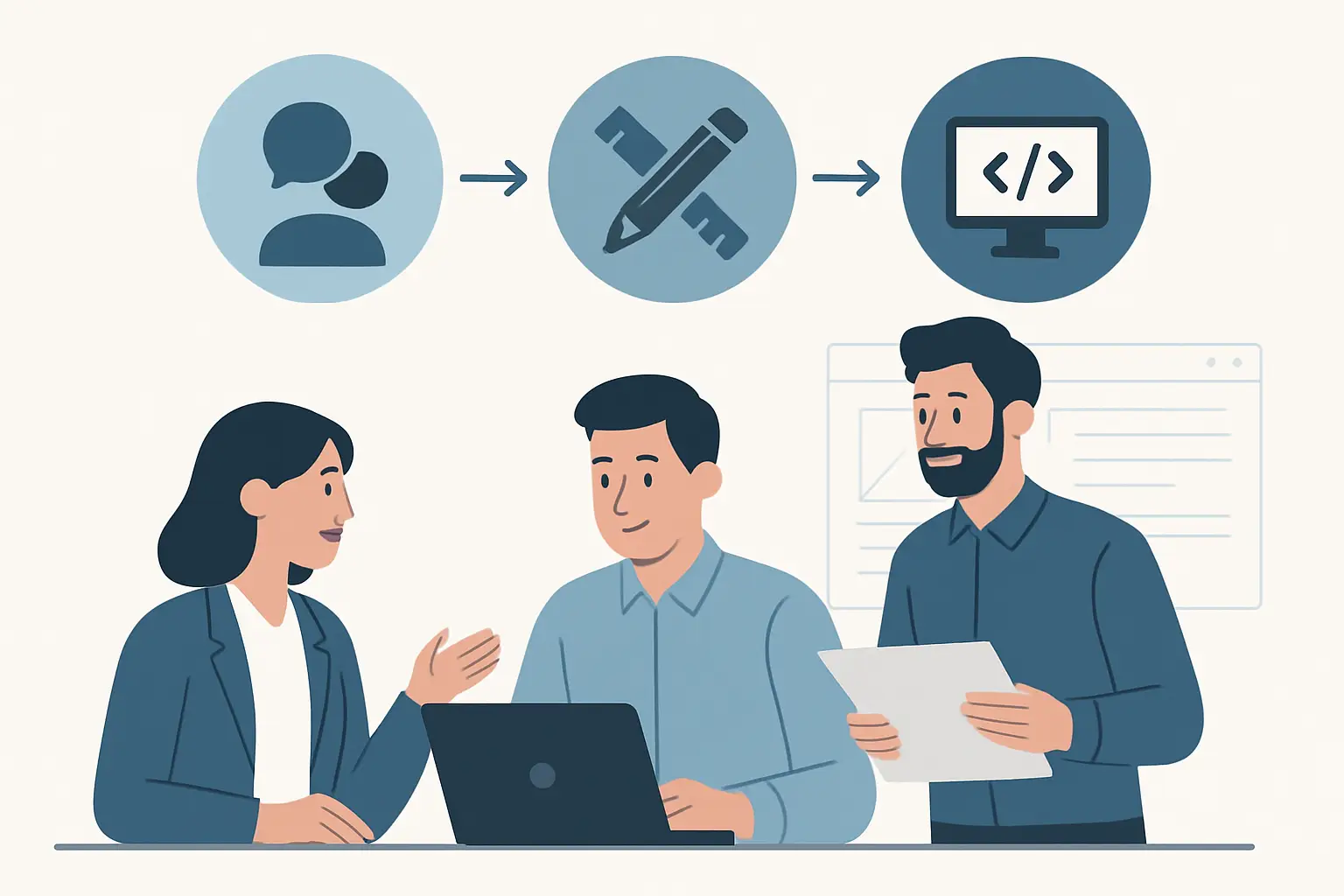
When we say consult design develop digital partner, we’re describing a single delivery model that covers the full loop: diagnose what’s happening, architect what should happen next, and then build and optimize the assets that make it real.
Consult is the strategy layer, but not the fluffy kind. It’s revenue-first decision-making based on your margins, inventory, AOV, LTV, and current channel performance. It answers questions like: Are we under-spending because tracking is unreliable? Is Meta prospecting failing because the offer is unclear? Is SEO lagging because the site architecture can’t support category growth?
Design is the translation layer. Strategy only matters if customers feel it in the creative, landing page flow, email experience, and brand presentation. This includes ad creative that matches the stage of awareness, landing pages that reduce friction, and email templates that support merchandising and retention.
Develop is the performance layer. It’s the technical work that removes bottlenecks and keeps systems stable: tracking, events, feeds, page speed, template builds, on-site SEO structure, and the iterative improvements that prevent your campaigns from getting capped by site limitations.
Partner is the accountability layer. Not “we delivered the project, good luck.” It means the same team owns setup, launch, testing, and ongoing optimization – with clear reporting and a documented process.
The hidden cost of fragmented marketing
Splitting strategy, creative, and execution across separate vendors can work for large teams with strong internal leadership. For most small-to-mid-sized brands, it adds operational drag.
The first cost is delay. One vendor waits on another, and your test cycle slows down. That matters because performance marketing is a game of iteration. If it takes three weeks to produce and launch a new angle, you lose the window where your competitors are still guessing.
The second cost is misaligned incentives. A paid media vendor might push spend to hit “efficiency” targets even if the site can’t convert cold traffic. An SEO vendor might chase top-of-funnel keywords that don’t map to your highest-margin categories. An email vendor might increase revenue by discounting too often, quietly hurting margin and brand perception.
The third cost is measurement confusion. When performance dips, everyone has a plausible explanation and no one owns the full funnel. That’s how brands get stuck in permanent troubleshooting mode.
A consult-design-develop partner reduces that fragmentation by operating against shared outcomes: profitable acquisition, conversion lift, retention growth, and compounding organic visibility.
Where the model shows up in real e-commerce growth
This approach is most valuable in the moments where channels intersect – because that’s where most revenue is either created or lost.
Paid advertising that’s tied to the site experience
Ads don’t fail in isolation. They fail when the message and the page don’t match, when load time kills intent, or when tracking is incomplete and optimizations drift.
A consult-first approach starts by validating the unit economics and the offer structure. Then design builds creative that speaks to specific objections and use cases, not generic product shots. Develop ensures events and conversion APIs are properly configured, product feeds are clean, and landing pages support the narrative.
The outcome is a shorter feedback loop: you can test new angles faster, understand what’s actually working, and scale without constantly “starting over.”
Lifecycle email that’s not just campaigns
Most brands underuse Klaviyo because they treat it like a newsletter tool. Revenue comes from a system: smart segmentation, deliverability discipline, automation coverage, and consistent creative that matches the site and ads.
Consult defines the retention strategy – what percentage of revenue should come from email, how aggressive promotions should be, and where repeat purchase behavior can be improved. Design builds templates and content structures that make campaigns easier to produce while staying on-brand. Develop handles flows, dynamic logic, tracking alignment, and ongoing testing.
When this is done well, email stops being “extra revenue” and becomes an operational lever that smooths out paid volatility.
SEO that supports revenue, not just traffic
SEO is a long-term asset, but it’s not passive. It needs a plan that connects technical structure, content priorities, and on-site merchandising.
Consult identifies the categories and queries that map to your margins and inventory strategy. Design ensures content and category pages are readable, persuasive, and consistent with your brand. Develop covers technical SEO, internal linking, schema where appropriate, and performance improvements.
This is how SEO becomes a compounding channel instead of a monthly report full of impressions that don’t convert.
What to look for in a consult-design-develop digital partner
Not every agency that says “full service” can actually run this model. The difference is whether they have the operational depth to execute across channels without handoffs breaking.
First, look for platform-specific specialization. Your brand doesn’t need generalists trying to keep up. You want certified ads specialists who can work inside Meta, Google, YouTube, LinkedIn, and TikTok with confidence, plus email expertise that’s built around Klaviyo best practices. Depth matters because the edge is often in the details: event quality, creative testing frameworks, audience structure, deliverability, and feed hygiene.
Second, look for a documented step-by-step workflow. If their process is “we’ll jump in and start optimizing,” expect chaos. A real delivery model includes structured discovery, clear priorities, timelines, and an optimization cadence that doesn’t depend on who is available that week.
Third, make sure they own the connective tissue: tracking, attribution expectations, reporting, and cross-channel coordination. If your partner can’t explain how paid traffic, landing pages, email flows, and SEO work together in your funnel, you’ll end up managing that integration yourself.
Finally, validate how they handle ongoing support. Performance marketing is never set-and-forget. You need a team that treats stability as part of the service – monitoring, QA, and fast fixes when something breaks.
Trade-offs and when this model might not fit
A consult-design-develop partner is built for brands that want speed, clarity, and accountability. But it isn’t the answer to every situation.
If you already have a strong in-house growth lead who can coordinate multiple vendors, you may prefer specialist shops for each channel. That can work well, but only if your internal team can enforce a unified strategy and keep the execution cycle fast.
If your immediate need is a narrow, one-time build – like a single landing page or a small creative batch – a full partner model may be more than you need. The advantage comes when you’re running continuous tests and want results to compound across quarters.
Budget is also a real factor. End-to-end ownership typically costs more than hiring a freelancer for one channel. The question is whether you’re already paying the “fragmentation tax” through slow cycles, missed opportunities, and unclear accountability.
How an engagement should actually run
You want an engagement that moves from diagnosis to execution without getting stuck in strategy decks.
It should begin with a short, focused consultation that clarifies goals, constraints, and the primary bottleneck. From there, you should receive a prioritized plan that links actions to outcomes: what will be fixed first, what will be tested next, and how success will be measured.
Execution should follow a rhythm: build the assets, launch the tests, review results, and iterate. Reporting should be decision-focused, not just data-heavy. You should always know what changed, why it changed, and what’s coming next.
If you’re looking for a partner built around this model, Proline Web operates as a consult-design-develop team across paid media, Klaviyo lifecycle email, and SEO – with a structured workflow and ongoing support designed for e-commerce growth.
Growth gets easier when you stop managing disconnected outputs and start running one coordinated system that keeps improving every week.